


The new safety standard rides in every vehicle.
Better protection against overload and the load optimisation to carry more for less, from the company fleets already trust to get load cells right.
Enforcement is setting the standard.
In the UK, overload enforcement has already made onboard weighing something buyers expect rather than something you sell them on. Most other markets are still early, and the fleets that adopt it first save money and save lives by managing overload before it turns into a fine, a failure or worse.
Look for the shield. A vehicle carrying VPG Onboard carries the new safety standard.
A new level of safety.
Before onboard weighing, commercial vehicles had no real protection against overload. Now fleet managers and buyers have an upgrade they can point to.
Max load, min cost.
Carry every legal kilogram and not one over. That means fewer part-loaded runs, less liability exposure and a lower risk of fines.
Fit-and-forget systems with no moving parts to wear or recalibrate.
Start with a proof-of-concept on your own fleet before you commit.
Thousands of installs, and the fleets running them will tell you so.
What VPG Onboard Weighing makes
Four families of systems that give drivers and fleet managers a load number they can trust before they ever reach a weighbridge.

Fit-and-forget axle and gross weight monitoring that warns drivers before a load crosses the legal limit.

Real-time axle-by-axle and gross weight readouts for vans, tippers, bulk carriers and waste vehicles.

Trade-approved onboard weighing for bulk haulage and waste collection, auditable at the point of load.

Application-specific installs developed with vehicle builders, covering sensor placement, displays and telematics.
You don't mess with safety.
Our customers need a partner they can trust to get the job done, in a category where "close enough" isn't good enough.
Overload protection only works if it's built by people who have spent decades getting load measurement right. Fewer companies fit that description than you might think, and the list gets shorter once you set aside the small local outfits selling a box with less engineering behind it.
We are a global load cell company. The same precision engineering behind our sensors sits behind every VPG business.
Our customers are global fleet leaders, and our field experience spans markets, vehicle types and regulatory regimes.
We helped set the standards for this category, and other load-safety products are still catching up.
Fit-and-forget systems for every vehicle in the fleet.
See the full product catalogue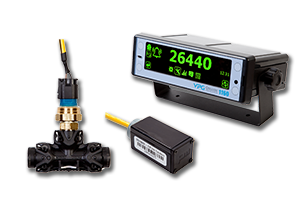
Fit-and-forget overload monitoring for rigid trucks and multi-trailer rigs, with no moving parts to wear or recalibrate.
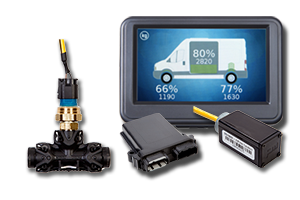
Axle load and gross weight monitoring for twin-axle vans, pick-ups and LCVs, installed in over 2,000 fleet vehicles.
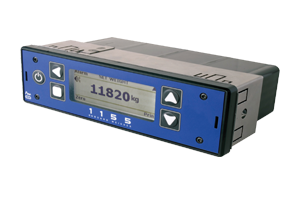
Onboard weighing and load optimisation for tippers and bulk carriers. Body builders have fitted it as an OEM standard for over a decade.
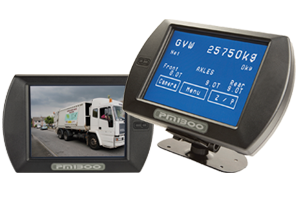
Robust on-vehicle weighing for refuse collection that helps fleets fill every load up to the legal limit.
Specified by fleet operators, body builders and OEMs wherever loads hit the road.
See all marketsThe masters of load and overload safety.
We have a long history in weighing and pioneered load protection and optimisation. Over decades, we helped write the safety standards commercial vehicles are built to today. If your vehicle carries VPG, your fleet is already optimised, with safer drivers, less liability, and fewer accidents and fines.
The professional solution for professionals.A market being written into law.
Since 2021, EU Directive 2015/719 has required every member state to actively identify vehicles that are likely to be overweight. In Australia, the Smart OBM regime makes type-approved onboard mass systems a condition of road access.
As axle-weight rules tighten, an onboard system is what lets a fleet keep running full payloads legally.
With VanWeigh there is no driver interaction required, which for us means minimal operational issues. We have had zero operational issues in three years.
See Safety 2.0 on your own fleet.
Start with a proof-of-concept on a handful of vehicles, with no commitment required.